Truce or deception? What are Putin’s plans for a new war?
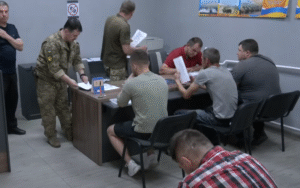
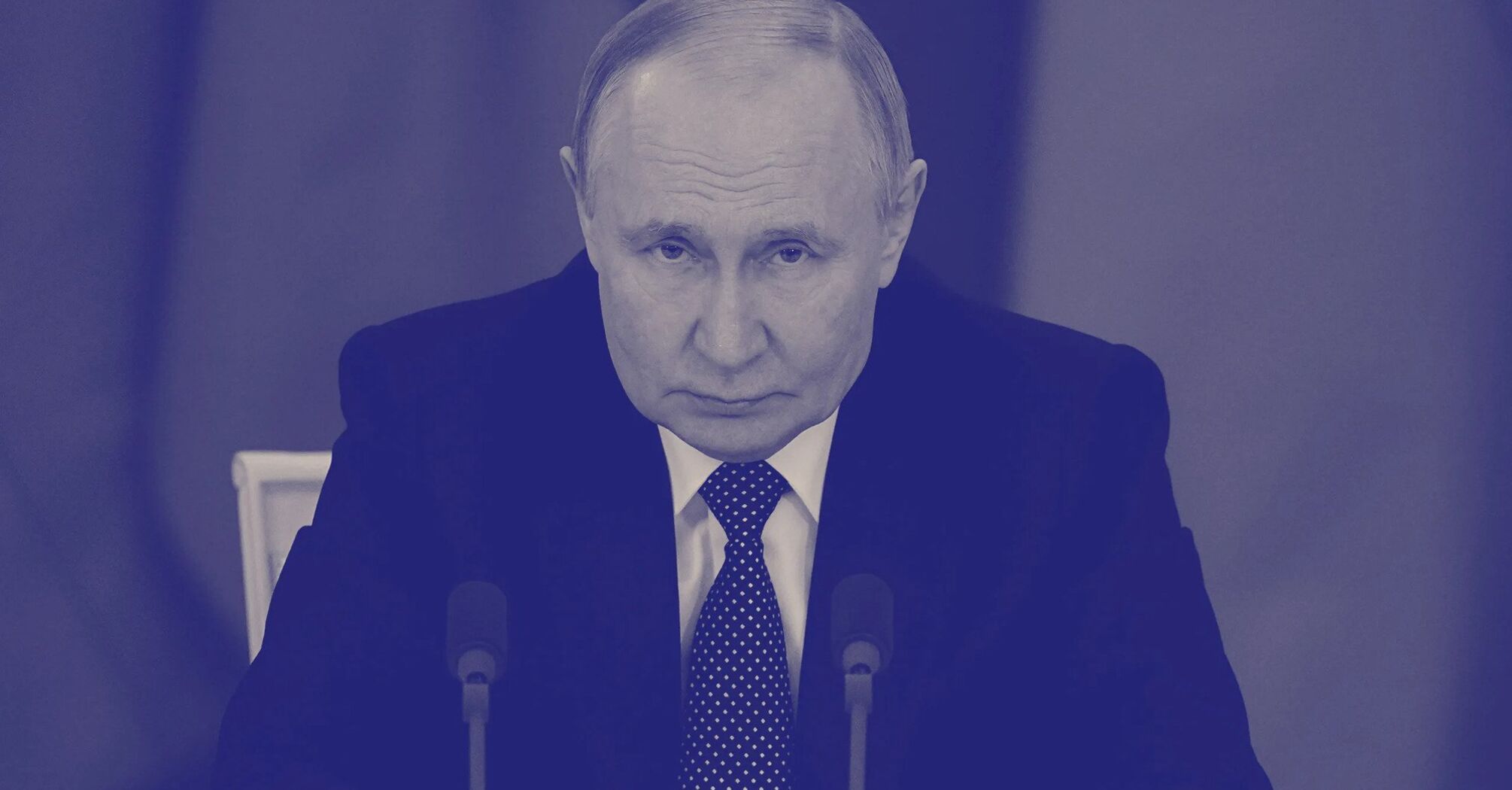
Vladimir Putin, the leader of Russia, after the Eurasian Economic Union summit in Minsk, spoke again about “denazification,” demilitarization,” and” external control over Ukraine.” These theses were already voiced at the beginning of the full-scale invasion. Putin also claimed that Moscow was supposedly ready for a third round of talks in Istanbul and was demonstrating readiness for dialogue, in particular through exchanges of prisoners of war and bodies of the dead.
In addition, he accused the Ukrainian side of Kyi” of “refusing to accept the bodies of dead fighters “s” but did not provide any evidence of this.
ISW experts consider these statements to be part of an information campaign aimed at discrediting the Ukrainian authorities and demoralizing the Ukrainian population.
ThKremlin’s Real Goal
ISW points out that the terms” “denazification” and” demilitarization” actually cover demands that include complete subordination — a change of government, the establishment of a pro-Russian regime, the liquidation of the Armed Forces, and the withdrawal of security support.
Thus, the Kremlin is not seeking peace but is trying to establish control, seeking to force Ukraine to capitulate under the guise of peace negotiations.
The Real State of the Russian Economy
Despite Putin’s claims about the” “stability”y” of the Russian economy, the budget situation is critical.
Military spending in 2025 has increased to 13.5 trillion rubles (approximately $172 billion), representing more than 6% of the country’s GDP.
The budget deficit has more than tripled — from 0.5% to 1.7% of GDP.
According to the Central Bank, most of the reserves and” “free resources”s” have already been exhausted.
State investments are primarily directed to the military industry.
Experts note that a decrease in defense spending in 2026 will hurt the economy, as the military sector is the primary source of production within the country.
War as an economic engine
Russia is increasing its production of weapons and military equipment, including tanks, infantry fighting vehicles, ships, and aircraft.
According to official data, in May 2025, military production increased by 2.6%.
The pace of aircraft production increased by 16.9% compared to the previous month.
Russia is actively modernizing its armored plants, in particular in Rubtsovsk.
The country is not only preparing for a long war with Ukraine but is also openly building up capabilities for a potential confrontation with NATO.
The course for drones instead of missiles
A significant part of new investments is directed to the production of drones. According to official data, Russia is already capable of producing hundreds of thousands of fiber-optic drones every month – they are more difficult to destroy with electronic warfare.
Modernize” “Gera” i” (an analog of Shahid) is actively used on the front, especially in the Pokrovsk and Novopavlivka areas.
Some of these drones are even capable of replacing 500-1000-kilogram aerial bombs.
The Russian army now mainly attacks using drones rather than guided bombs.
These technologies pose a serious challenge to the Ukrainian defense forces, which had previously successfully shot down conventional Shahed-136s.
Use of chemical weapons
Another serious threat is chemical aggression. According to the Center for Strategic Communications, in May 2025 alone, 888 cases of the use of chemical agents by Russian troops were recorded.
The Organization for the Prohibition of Chemical Weapons has confirmed that Russian forces have used a CS gas drone (tear gas) against Ukrainian troops near the Donetsk and Dnipropetrovsk regions. This is a direct violation of the Chemical Weapons Convention, which Russia itself is a signatory to.
Preparing for a large-scale conflict
ISW data indicates that Russia is not only waging war in Ukraine but is also preparing for a much wider conflict. In particular:
the production of ships, aircraft, and armored vehicles is increasing;
the military structure is being reformed for a long-term struggle;
Strategic assets are being actively modernized, including drones resistant to electronic war’s statements about” “denazification”n” are not about peace talks. This is rhetoric that hides aggression, massive arms purchases, the use of chemical weapons, and preparations for new military escalations. Despite attempts to create an image of a peacemaker, Moscow demonstrates something completely different: it does not intend to end the war but rather is preparing for its expansion.
Earlier, it was reported that Russia is actively increasing the production of new medium-range ballistic missiles” “Oreshn”k.” Every month, its factories produce 25 such missiles, which provides up to 300 units per year. These missiles possess impressive characteristics, including a range of up to 4,000 km and the ability to carry multiple warheads with independent retargeting capabilities.
For more up-to-date news, follow our updates on news platforms.