Earth under threat: scientists warn of dangerous “invisible” asteroids
Asteroids that cross the Earth’s orbit are recognized as one of the most serious space threats. They are constantly monitored using modern telescopes, including the new Vera Rubin Observatory.
A recent study has identified a class of objects that are practically invisible to our observations. These are asteroids moving in resonance with Venus, which revolve around the Sun in the same period as this planet. These bodies are closer to Earth than the central asteroid belt between Mars and Jupiter, but the specific lighting conditions make them almost invisible.
Scientists report that the orbits of such asteroids are very unstable. Although they “share” the path with Venus, their trajectories often bring them near Mercury or Earth, but they do not approach Venus itself. Only about 20 such asteroids are known, the most famous of which is Zoozve, with a diameter of up to 500 meters. Their actual number may be much higher, as some were detected despite the very low probability of observation. It was found that about once every 12 thousand years their orbits change dramatically, possibly crossing the Earth’s orbit or approaching at a distance five times smaller than the distance to the Moon.
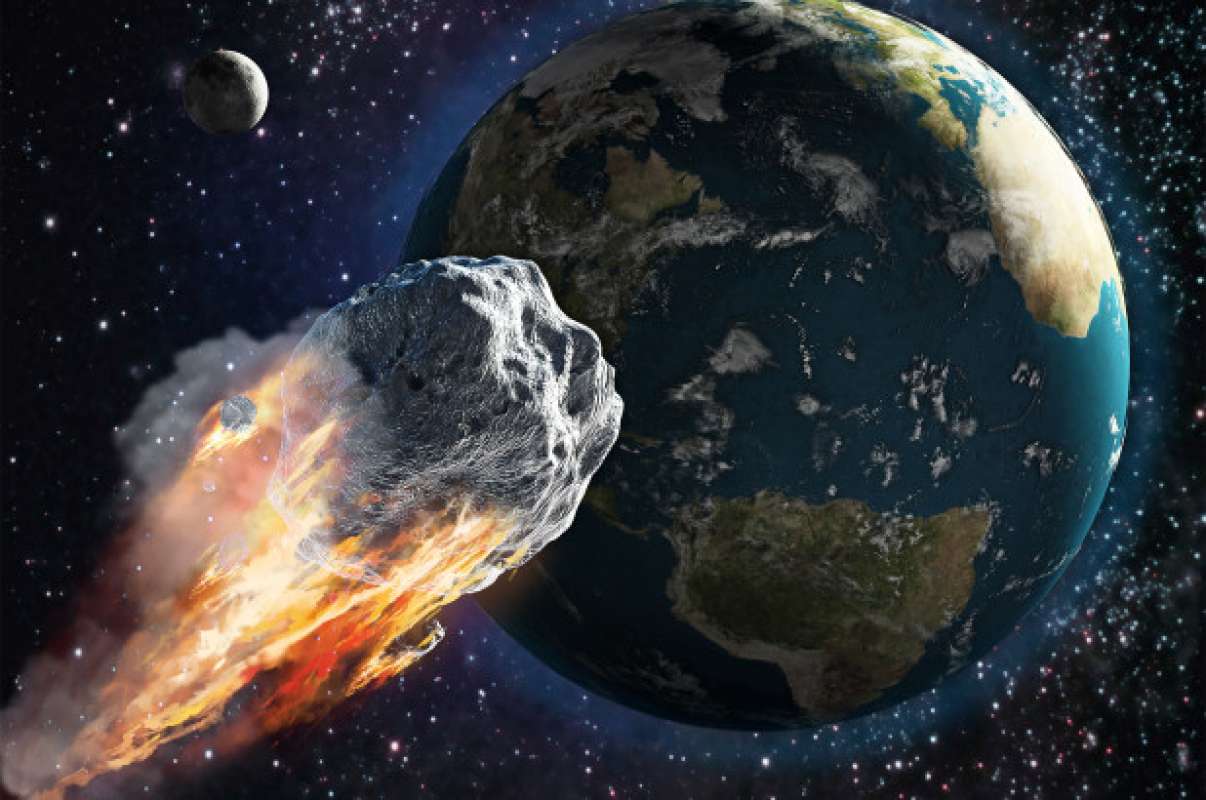
Most asteroids are minor, but among the “invisible” there are also potentially dangerous objects with a diameter of 200–500 meters. The impact of such a body can form a crater several kilometers in size and release energy equivalent to hundreds of megatons of explosives, which would lead to a global catastrophe in densely populated areas.
These asteroids do not disappear, but almost always remain outside the zone of full illumination. They are mainly observed in phases when they are visible only half-illuminated or in the form of a thin crescent, making them barely noticeable even to the most modern ground-based telescopes.
According to Professor Valerio Carruba, even Vera Rubin only detects them briefly during each orbit. To fully monitor such objects, scientists suggest placing a space telescope closer to the Sun, such as at the L2 point of Venus, to better assess the potential threat.