Heat instead of snow, desert instead of crops: Ukraine is threatened by climate change
Ukraine is facing significant climate change affecting agriculture. As Serhiy Avramenko, Doctor of Agricultural Sciences, notes, the situation in the country varies. In some regions, climate change creates new opportunities, while others struggle with water shortages and crop losses.
Warm winters ensure the continuation of the winter crop sowing campaign, which allows farmers, in some cases, to sow even in November or December. This, in turn, contributes to higher yields by extending the growing season. However, warming also increases the survival of more pests, which can overwinter without problems and multiply rapidly in the spring. This problem can be partially solved by plant protection. However, the most significant challenges remain the reduction in precipitation.
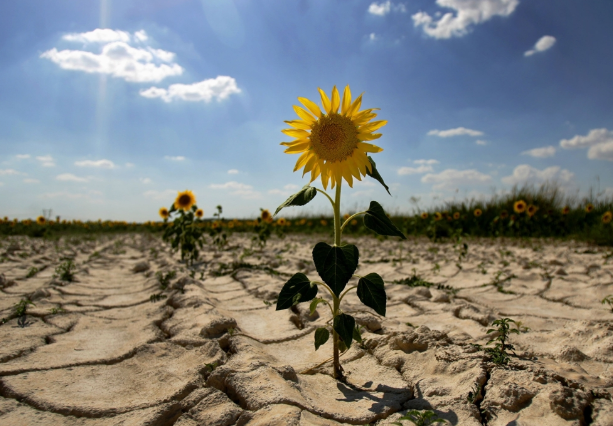
In the east and south of Ukraine, the climate is gradually approaching subtropical. Here, winters are becoming less snowy, and hot summers cause water shortages. For example, in the Odessa region, precipitation has decreased so much that, in some areas, in 10-20 years, we can expect the appearance of semi-deserts. To conduct agriculture in these conditions, active irrigation will be required, and farmers are already struggling to ensure profitability.
At the same time, the northern, western, and Polissya regions receive certain advantages. Precipitation here remains stable, and temperature changes allow the cultivation of a wider variety of crops. For example, sunflower, which previously did not grow well in western regions, now yields well. Also, melon crops, such as watermelons, are increasingly grown in the Kharkiv and Kyiv regions.
However, the war in Ukraine has added severe difficulties to the agricultural sector. Significant areas of land on the front or near it have become unsuitable for cultivation due to mining and pollution. The first two years of the full-scale conflict were marked by excessive rainfall, while in 2024-2025, the situation will change dramatically: the territories will become drier.
The losses due to the occupation are also enormous, because it was there that the main areas for growing grain, oilseed, and leguminous crops were located. The Luhansk region was destroyed, and the Donetsk, Zaporizhia, and Kherson regions were partially affected. Due to constant shelling, working in the fields near the front line becomes practically impossible. In the Kharkiv region, grain yields have fallen by half.
According to Avramenko, a food crisis is not expected in Ukraine: the country can provide itself with food. However, a decrease in the production of basic crops such as wheat, corn, and sunflowers will significantly affect the economy. The decline in exports reduces budget revenues and working capital on farms, complicating the purchase of new equipment and farm management.