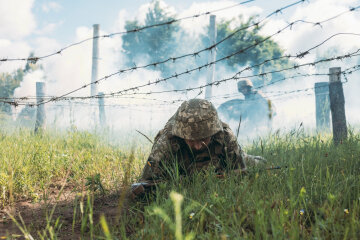
The military man explained the motives that prompted him to join the NWFC
Until August 30, Ukraine had a simplified procedure for returning to military service for those soldiers who voluntarily left their positions. One of the service members, who served in the 1st Corps of the Azov National Guard, shared his experience of returning to the army and talked about the difficulties he encountered.
According to him, he voluntarily mobilized in October 2022, but soon began to experience serious health problems. Despite his requests for treatment and appeals to the command, he received no proper response, and his problems only grew. After the death of the platoon commander, the soldier’s problems were ignored, and the command even accused him of simulation.
To clarify his health, he was sent to a military medical commission, which formally recognized his condition as satisfactory. As a result, the company commander was allowed to leave the service if he wanted to be treated.
The situation was complicated by the fact that the battalion lacked a permanent location, making it impossible to address the soldiers’ personal and medical issues. According to the serviceman, this significantly worsened service conditions.
After eight months of treatment among civilians, he was looking for an opportunity to transfer to another unit, since he did not want to return to his previous command. He sought to find a unit with better management.
The transfer was made possible thanks to the considerable support of the Azov recruiting center, which helped with the paperwork and settlement of issues related to status. He only submitted the documents and appeared at the designated location.
After registration, the serviceman underwent training in a new part of the NGU and an additional 1.5 months of training in Azov, which gave him confidence to return to service. He noted that two months passed from the moment he returned from treatment to his arrival in the new unit.
This story illustrates the difficulties service members face and highlights the importance of medical and command support.