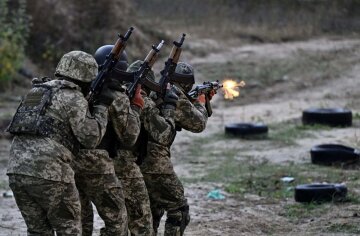
Evaders and draft evaders on the front lines: how those who avoided mobilization manifest themselves
The soldiers who left their units and joined the 1st Separate Assault Regiment continue to fight on an equal footing with the others. It should be noted that the modern image of an assault soldier is largely similar to the stereotype of a deserter.
This information was shared by the commander of the 1st Separate Assault Regiment, Dmitry (Perun) Filatov, in an interview with Radio Liberty.
The problem of desertion
Filatov pointed out that there is no universal solution to the problem of desertion, because everything depends on the specific situation. “Nothing is universally accepted, each case is individual. Some get tired of fighting, and commanders may not ensure that soldiers are transferred to lighter positions in order to reduce their workload,” he noted.
The commander also emphasized that during modern fighting, infantrymen only need one difficult task to require replacement. However, this is often not taken into account, which leads to delays or lack of replacement.
The Modern Image of the Stormtrooper
Filatov described how many modern stormtroopers are those who have tried to avoid their duties. “On average, a stormtrooper in the last few years is a person who did not seek to defend his country, but rather sought ways to avoid responsibility,” he emphasized.
However, after undergoing training and adaptation, their perception of reality changes. It is no longer just a matter of patriotism, but also an awareness of the importance of the tasks. The skills needed to survive and achieve victory become critically important.
According to the commander, even among the recruits there are individuals who become outstanding warriors. Approximately 10% of them demonstrate leadership qualities and after a few months turn into commanders with a new understanding of their duties.
True veterans
According to Filatov, veterans are those who have proven their readiness to serve in combat. These are people who can not only carry out tasks, but also be an example for others. Within six months, junior commanders are formed, among whom new platoon commanders later appear, and after a year or a year and a half – company commanders.
“In six months, it becomes obvious who are natural leaders – they become sergeants. In another six months, platoon commanders are elected from among them, and after a year and a half – company commanders,” he noted.
Thus, Dmytro Filatov assures that even those who previously avoided service can become strong leaders under certain conditions, ready to take on responsibility.
Earlier, it was reported that the Rada plans to allow the release of mobilized from military service under certain conditions. It was also reported that foreign military personnel will not be able to completely replace Ukrainians at the front.