Clogged faucet and low pressure: a quick way to clean the “mesh” in 5 minutes that plumbers don’t talk about
A decrease in water pressure in a faucet is often associated with problems with the water supply, however, in most cases the problem lies in the contamination of the aerator mesh, where limescale, rust and fine dirt accumulate.
This element, located at the end of the faucet, ensures a uniform flow of water. Over time, its holes can become clogged with mineral deposits, which not only reduces the pressure, but can also affect the quality of the water.
One of the easiest cleaning methods does not require special chemicals – ordinary table vinegar is enough, which effectively dissolves limescale, which is usually the basis of contaminants in tap water.
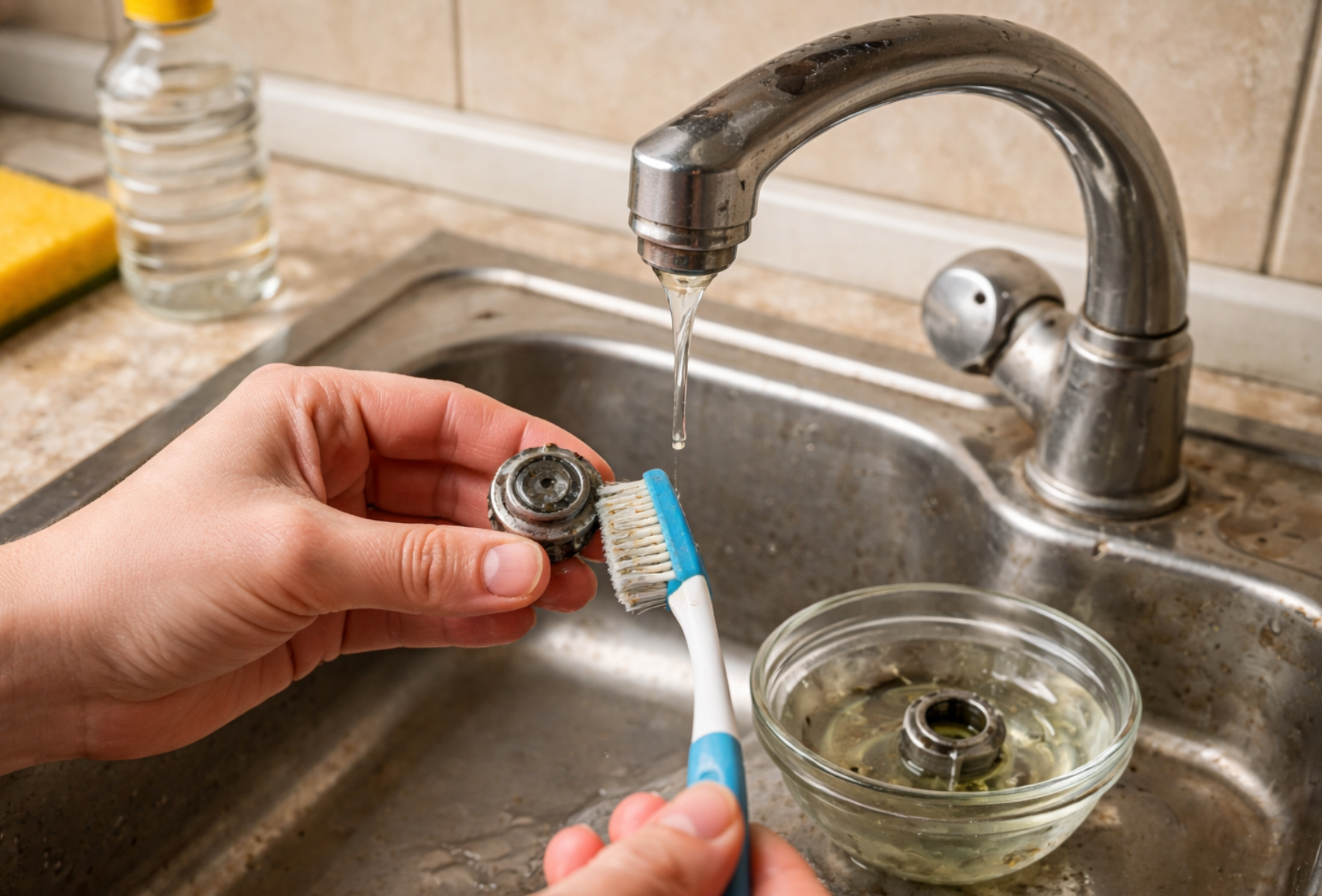
Before cleaning, you should try to open the mesh (if possible) or at least wipe it of surface dirt. Once the mesh is cleaned, there are two ways to clean it:
— immerse the part in a vinegar solution for 30–60 minutes;
— or wrap the faucet with a cloth soaked in vinegar if the mesh is not removable.
After that, the remaining plaque is easily washed off with warm water, and for best results, it is recommended to go through it with an old toothbrush.
Experts advise not to wait for significant contamination. Regular cleaning once every few weeks will help avoid the accumulation of deposits and extend the service life of plumbing.
Ignoring the problem can lead not only to a decrease in pressure, but also to damage to the internal parts of the faucet. Therefore, prevention, which takes only 5 minutes, can significantly save your money.
We remind you that pouring boiling water into the sink can have undesirable consequences, as plumbers have told us. Earlier, recommendations were also announced on choosing the optimal washing mode to save electricity.