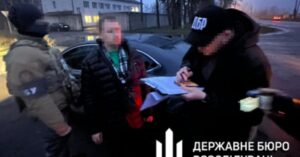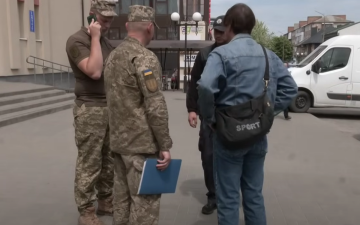
The CCC clarified when it is prohibited to film the delivery of summonses to Ukrainians
Filming employees of territorial procurement centers (TPCs) for video or photos and distributing them on social networks is legal, but only under certain conditions. In wartime, such actions can be dangerous to the state, so there are specific rules governing the collection and distribution of materials related to the TPC’s activities.
Lawyer Oleksandr Dubovy notes that citizens have the legal right to record the activities of state authorities in public places. This means that filming TPC employees in areas such as streets, public transport, shopping malls, or train stations is absolutely permissible, since these individuals are performing their official duties. They are not prohibited from filming without prior consent.
This right is supported by the Constitutional Court of Ukraine’s decision No. 2-rp/2012, which confirms that the activities of certain state bodies are public, thereby fostering public trust.
However, there are significant restrictions on such actions. You may be subject to criminal liability if:
1. Your filming prevents CCC employees from performing their duties. If you block their work or provoke conflicts, this may be recognized as obstruction of the lawful activities of the Armed Forces of Ukraine.
2. If you publish materials that may harm the country’s defense capabilities. This includes information about the location of CCC units, their routes, tactical actions, and other sensitive data. Violations may be qualified as disclosure of military information, punishable by imprisonment.
3. Filming in military or regime-controlled areas is prohibited—even if CCC employees are only present there.
Filming CCC employees in public places is legal if you adhere to some key conditions:
– do not interfere with their work;
– do not reveal sensitive information;
– Do not photograph government facilities.
Otherwise, you may be subject to criminal liability.