Hungary at a crossroads: more than 100,000 people took part in an anti-government rally
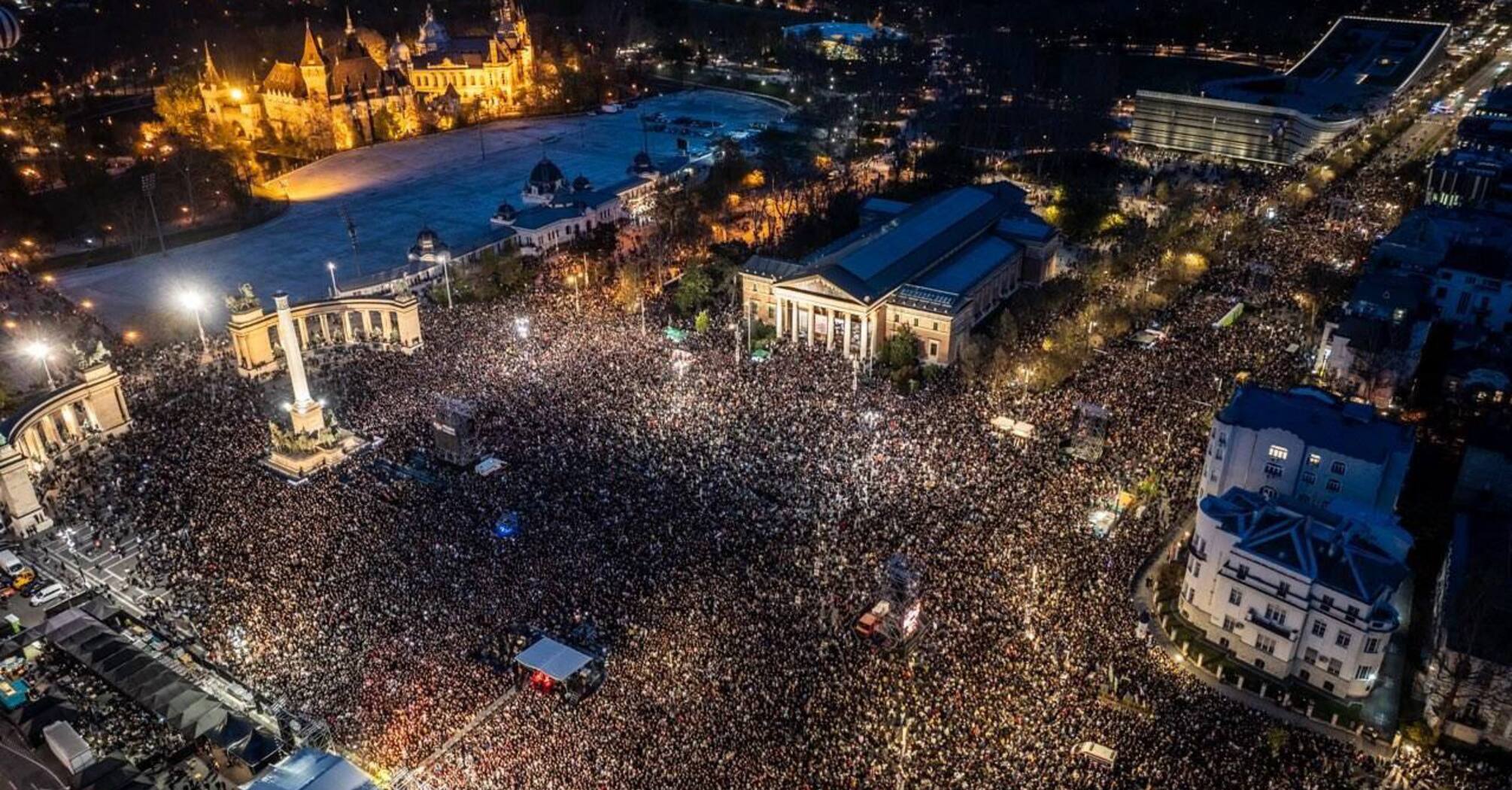
Two days before the parliamentary elections in Budapest, a large opposition rally was held, which, according to organizers and local media, gathered more than 100,000 participants. This information is reported by the Associated Press.
People filled Heroes’ Square and surrounding streets during a seven-hour protest concert, which became the main event of the political weekend in Hungary. The event combined performances by popular artists and political statements, and participants openly spoke out against the government of Prime Minister Viktor Orbán.
One of the main slogans of the protest was “Ruszkik haza!” (“Russians, go home!”), which arose during the Hungarian revolution of 1956. In the modern context, it is used as a symbol of protest against the rapprochement of power with Russia.
Various provocative visual images were also presented on stage, including banners with caricatures of Orbán next to Russian President Vladimir Putin. The organizers of the action emphasized that such images should emphasize criticism of the government’s foreign policy and its relations with Moscow.
The protest took place against the backdrop of an intensification of the political struggle on the eve of the elections. According to the latest sociological research, the opposition party TISZA is in the lead with support of about 50% among likely voters, while the ruling party Fidesz has about 37%. At the same time, analysts emphasize that Orbán retains significant support in the regions and among the older population, which makes it difficult to predict the results of the vote.
It is worth noting the difference in support between generations: young people under 30 are more likely to lean towards opposition forces, while older citizens remain loyal to the government.
This action in Budapest became one of the largest political events in recent years and demonstrated the strength of the opposition on the threshold of an important stage of the election campaign.
It is worth adding that Viktor Orban intensified anti-Ukrainian rhetoric as part of his election campaign, presented on April 12, 2026. The streets of Budapest and other cities were filled with billboards and posters with statements about the alleged “Hungarian belonging” of Uzhhorod and borscht.