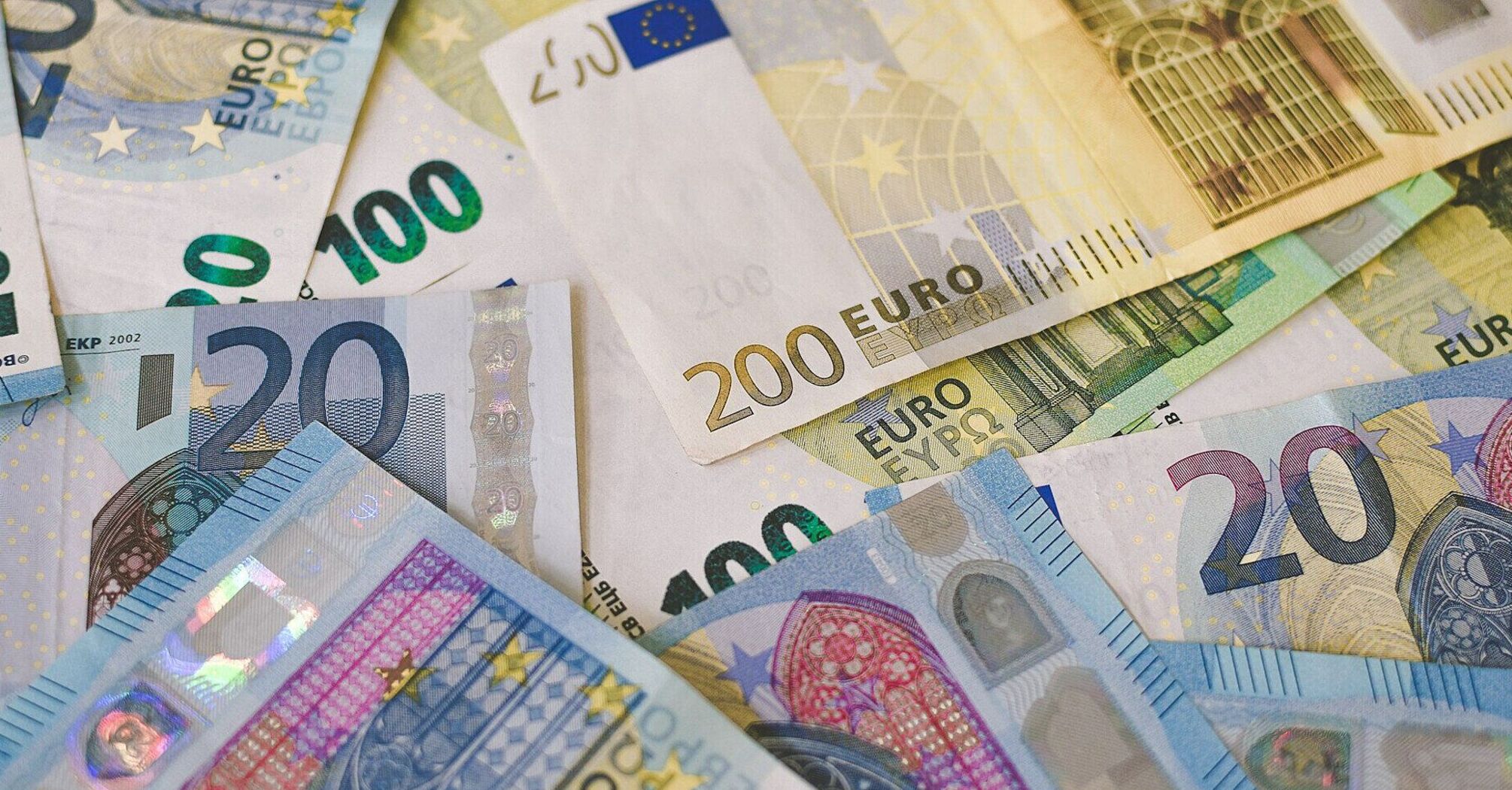
The euro fell sharply after a rapid rise: what are the forecasts for the exchange rate?
Last week, the hryvnia showed a slight strengthening against the dollar and the euro. Will the national currency be able to maintain these positions in the coming days? The Ministry of Finance explains.
On the interbank market, the dollar rate gradually decreased from 41.77 to 41.71 UAH, which was due to an increase in the supply of currency at the end of July during the tax period and a general slowdown in business activity. The cash dollar rate also decreased – from 41.95 to 41.91 UAH.
In contrast, the euro rate experienced a significant decrease. The non-cash rate decreased from 49.10 to 47.75 UAH, and the cash rate – from 49.40 to 48.15 UAH, which was the most significant drop among other currencies.
Reasons for the sharp fall of the euro
The main reason for the collapse is the conclusion of an agreement between the USA and the European Union. Despite the promised 15% tariff, the EU has pledged to invest $600 billion in the US economy, buy $750 billion in fuel, and purchase hundreds of billions of dollars in military equipment.
These commitments must be fulfilled by 2028, before the next US presidential election. The implementation of such conditions raises some doubts. As a result, the euro/dollar quotations on the global market fell by 3% in a week, which caused the euro to depreciate against the hryvnia.
Weak statistics on the US labor market
At the end of the week, disappointing data on the US labor market were published, which made the market expect a reduction in the Federal Reserve’s discount rate in September. Thanks to this, the euro/dollar pair rose to 1.158. However, the growth will be temporary, as the agreement between the US and the EU will have a much greater impact on the market, so the euro is likely to fall again.
However, if it becomes clear that the European Union will not fulfill its obligations, the situation may change, and the decline may stop.
Foreign exchange market: interbank and NBU
The average daily foreign exchange deficit on the interbank market decreased by 40% to $77 million, due to increased sales of foreign currency during the tax period, when the supply increased by 25%.
In July, there was a shortage of $2.3 billion in foreign exchange, the highest monthly figure since December 2023.
The National Bank of Ukraine reduced the volume of foreign exchange interventions by 21% to $639.6 million, the lowest figure in the last seven weeks.
What is happening in the cash market
Statistics on household transactions at the end of July were released with some distortions, as the month was coming to an end and the market was showing instability. Therefore, it is more appropriate to pay attention to the data for the month as a whole.
In July, activity in the cash market decreased slightly: demand fell by 3.1%, and supply by 2.2%. The summer season and holidays influenced this trend. As a result, the average daily volume of transactions decreased by 7.2% to $14.2 million. In total, Ukrainians conducted currency transactions for $327.3 million during the month.
Non-cash market: more active selling, less buying
In the non-cash market in July, Ukrainians sold slightly more currency (an increase of 1.5%) and bought less (a decrease of 3.4%). The positive balance reached $2.6 million per day – one of the best indicators in recent years. The balance for the month amounted to $60.3 million.
Everyone who receives funds to a bank card should be aware that not all transfers are considered “safe” from a tax point of view. The National Bank is developing a plan to restrict card transfers and set limits on cash transfers through self-service terminals.