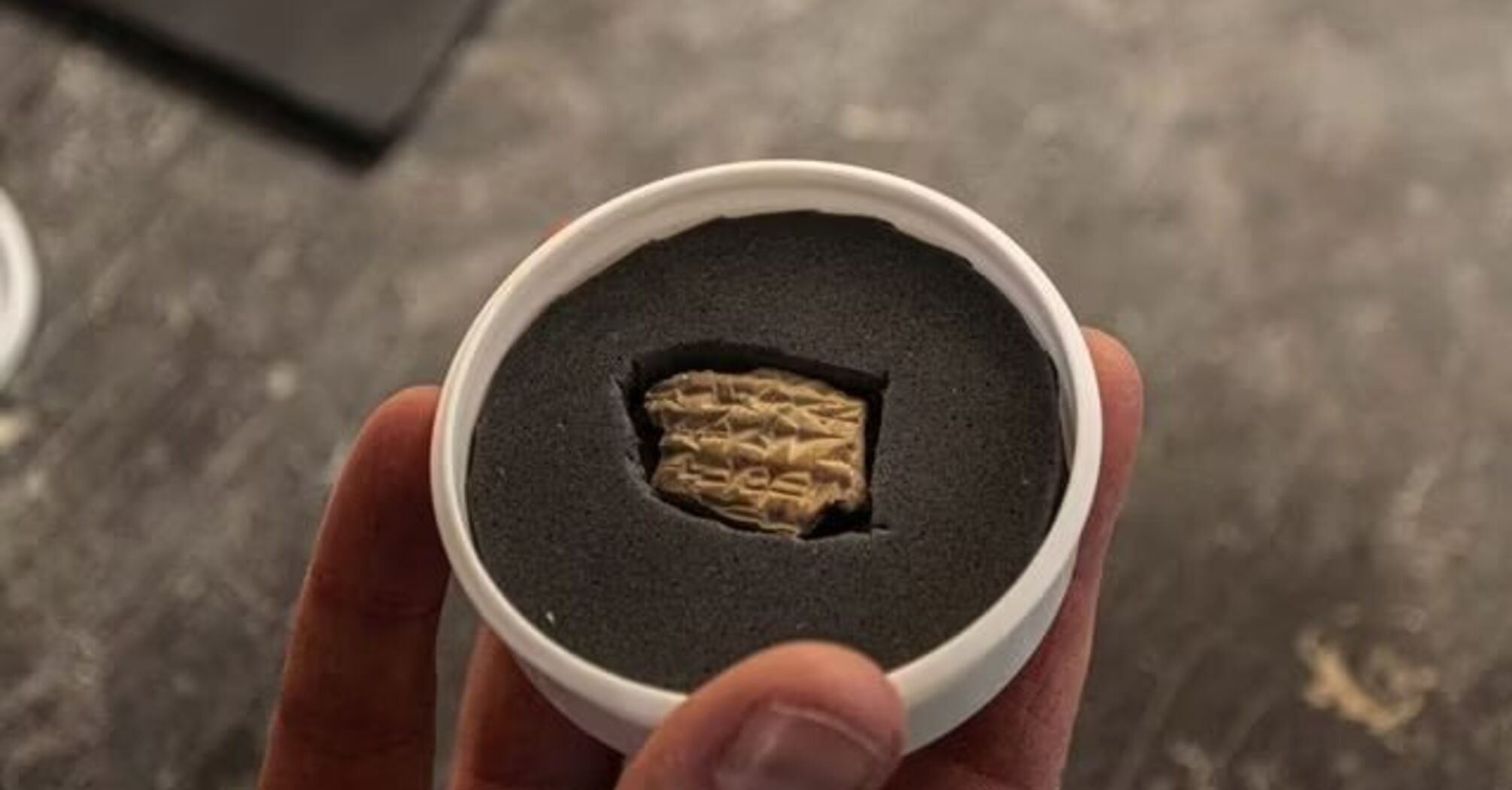
A clay fragment with the oldest Akkadian inscription was discovered in Jerusalem
During archaeological excavations in Jerusalem, a clay tablet inscribed in Akkadian was discovered, recording historical information about the relationship between the Assyrian Empire and the Kingdom of Judah.
This find, measuring about 2.5 centimeters, was found near the Temple Mount in the Old City of Jerusalem and dates back about 2,700 years. This is the first known written evidence of ties between the two ancient states. Researchers believe that the inscription is probably a tax message from the Assyrian ruler to his Jewish colleague.
The text mentions the name of a high-ranking Assyrian official and the month of Av, indicating the probable date of tax collection. The find dates back to the reign of King Sennacherib.
“This may be related to [King of Judah] Hezekiah’s rebellion against [Assyrian King] Sennacherib. [Hezekiah] succeeded in delaying the payment of taxes, which prompted Sennacherib to march on Jerusalem,” comments Dr. Peter Zilberg of Bar-Ilan University.