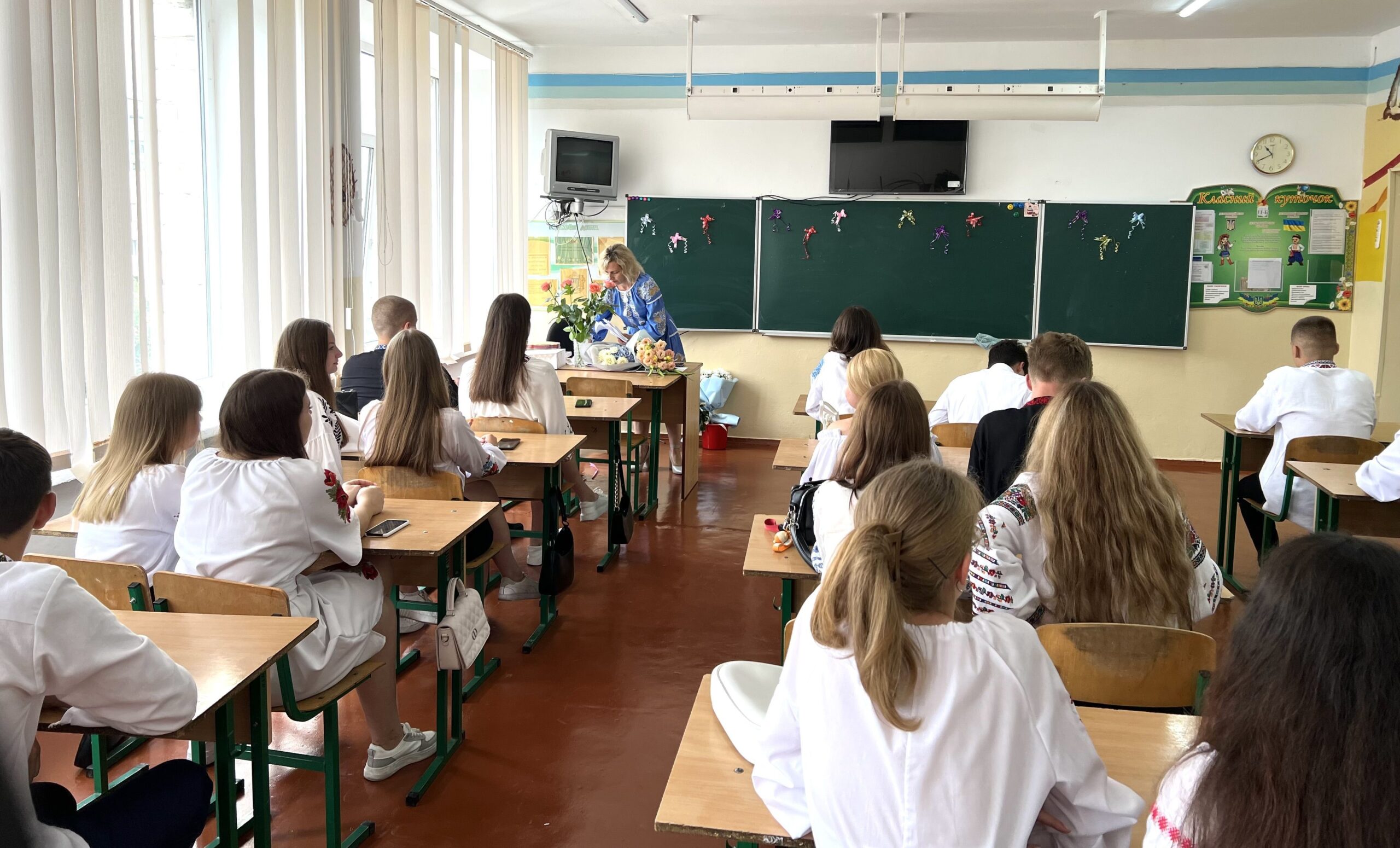
The teacher expressed her observations about the irrationality of the history curriculum – the Ministry of Education and Science has no intention of making any changes
In history lessons, students repeatedly encounter the same events and personalities, which can make them reluctant to delve into the material again. They often feel that they already have a sufficient understanding of these aspects, so they do not see the need to re-study them.
Lesya Khlypavka, a teacher from Cherkasy and the author of history curricula, shared her impressions on social media about why students may feel a psychological barrier to re-studying familiar information and provided advice on improving teaching methods in high school.
The teacher noted that taking into account the peculiarities of students’ perception of educational material can increase their interest. Historical topics can be viewed from different perspectives, but modern curricula do not take this into account.
Khlypavka found out why students lose interest in re-studying the same topics. If the material is first presented at a basic level and then studied in more detail, children often perceive it as something already known. This causes a feeling of deja vu, and the brain automatically labels such information as “old.”
The teacher also emphasized that for a deeper analysis of historical events, it is necessary to remember basic facts, but students often forget them, so teachers have to spend a lot of time re-explaining what has already been learned.
Another important aspect is the “clip thinking” of modern children, who are accustomed to the rapid change of information. In this context, repeating educational material may seem boring and illogical to them.
This problem also applies to images of historical figures. When the same personalities are discussed for many years in a row without new contexts, they begin to disappear from reality for students.
“When a student sees the same topic in a textbook again, his brain automatically filters this information as one that has already been studied,” Khlypavka noted.
She believes that it is time to radically change approaches to teaching history in high school. Instead of focusing on memorizing dates, it is worth focusing on studying history through the prism of culture, everyday life, and politics.
However, the reforms currently remain on paper: “I reviewed the programs for specialized classes on the Ministry of Education website – everything remained unchanged, the past was simply transferred to three grades,” Khlypavka concluded.