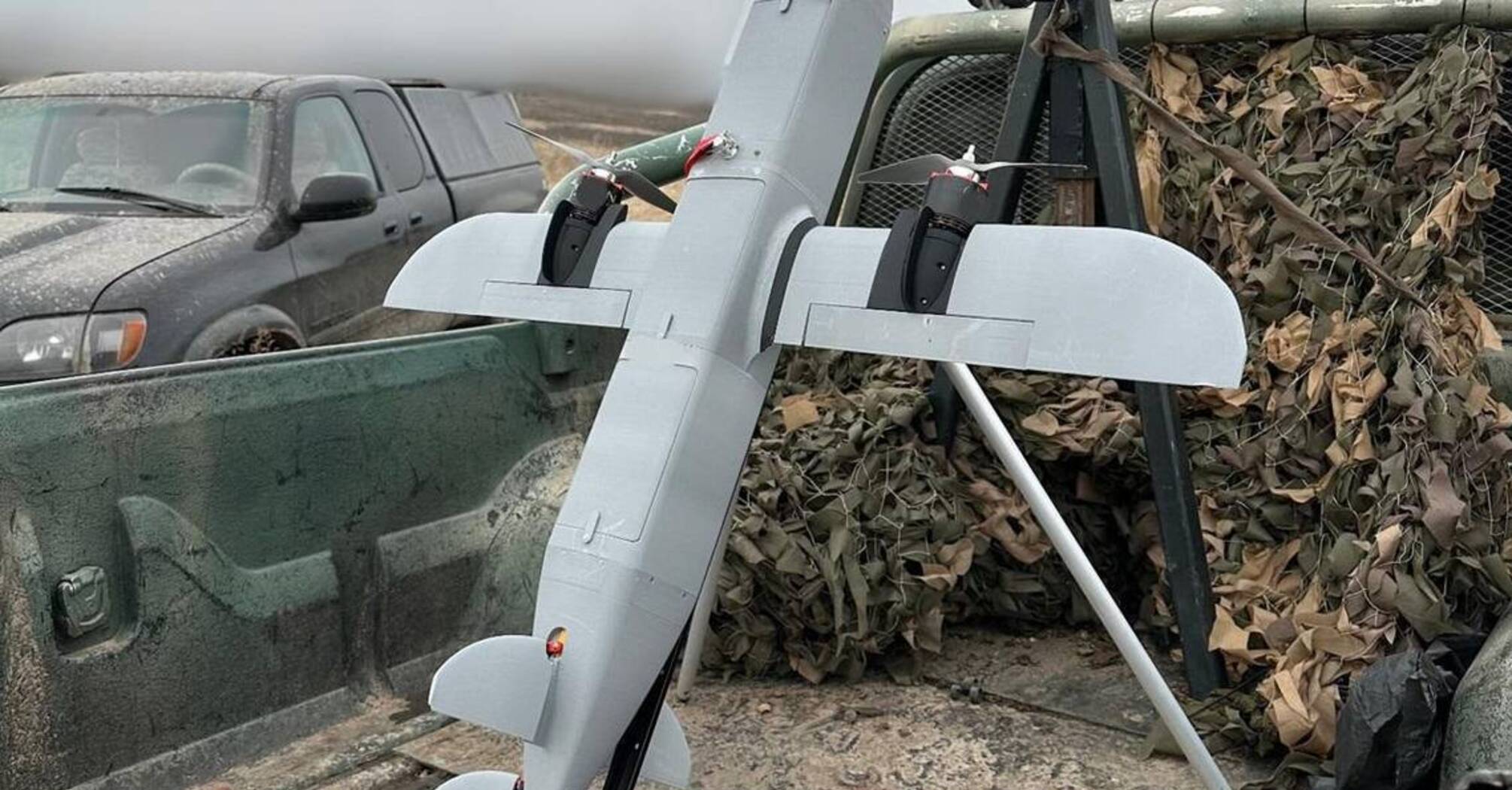
Attack on Kyiv using domestically produced interceptor drones
During the recent massive attack on Kyiv, Ukraine deployed domestically produced drones for the first time. According to Air Force spokesman Yuri Ignat, Russian forces launched more than 330 strike drones in one night, a record since the beginning of the war.
Military experts warn that Russia could launch up to 700-800 long-range UAVs into Ukraine every day over the next year.
Yuri Fedorenko pointed out that not all drones are the same. Although the enemy has a numerical advantage, Ukraine has significantly reduced the backlog in developing reconnaissance drones of the “Wing” type. If earlier the Russians used Supercam, Zala, and Orlany without proper countermeasures, today the Ukrainian SHARK and Leleka partially meet the needs, and our air defense system regularly defeats enemy drones.
Tactical-level strike drones of the Lancet type remain Russia’s advantage. Ukraine has the RAM-2X, which has not yet reached the level of its Russian counterparts but is already in use. At the same time, work is underway on new models. More affordable drones, such as DARTS, which are designed to destroy enemy air defenses, are also being effectively used.
In the situation with Mavic-type drones, the balance is upset. Somewhere Ukraine has an advantage, somewhere Russia. The primary issue is access to the Chinese market, which is significantly limited for us, whereas Russia purchases drones directly. Today, there are no alternatives to the Mavic with the optimal price-quality ratio, so Ukraine has to look for workarounds to ensure its supply until our and European manufacturers develop full-fledged replacements.
The situation with FPV drones controlled via fiber optics is particularly critical. These drones are not susceptible to the influence of electronic warfare due to a direct cable connection, and their range depends solely on their length. The first developments began to appear in late 2024 in Ukraine and Russia. Still, the Russians were able to quickly enter the Chinese market, testing several types of equipment and purchasing the most effective ones. Ukrainian manufacturers, in turn, informed us that most of the machines were occupied, and only one could be made conditionally available to us.
This gap in development highlights the need to revise approaches to organizing defense. In particular, defense forces can change the technical arrangement of positions, closing roads with nets and setting up additional posts to destroy drones.
However, in the field of FPV drones with automatic guidance, Ukrainian developments demonstrate better results. Both sides continue to experiment, but so far, Ukrainian models are proving to be more effective.
In the category of heavy night drones, such as the “Baba Yaga,” Ukraine has a clear advantage, whereas Russia does not possess any similar devices. Ukraine also maintains its lead in the use of drones for air defense despite Russia’s attempts to emulate this tactic.
In the field of surface drones, Ukraine remains the undisputed leader. Russia is attempting to develop similar devices but has not yet achieved success.
At the same time, Russia is actively modernizing its kamikaze drones, increasing the frequency of launches and increasing the flight altitude to 2 km to reduce the effectiveness of Ukrainian troops. In response, Ukraine is developing interceptor drones, which are already used in combat conditions, cooperating with domestic and international partners. Although their number is currently small, this is only the beginning, as work is underway on jet interceptors that can destroy even the fastest enemy drones.
Russia plans to launch up to 500 Shaheds daily, so Ukraine needs to increase production. This requires investment and qualified specialists. That is why the Defense Forces invite all those who wish to join the units engaged in countering UAVs.
A new wave of attacks is expected in September, with a particular focus on targeting energy infrastructure. Russia will continue its actions as long as it has missiles and drones. Therefore, Ukraine needs to develop a multi-layered air defense system that incorporates both technical means and the human factor, as the enemy can adapt its tactical approaches.
Ukrainians must be active participants in this period. Supporting the armed forces, financing drones, and participating in military units is an opportunity not only to deter the enemy but also to harm him.
The key to victory lies not only in external assistance but in ourselves and our unity.
Earlier, Kyiv was subjected to a massive attack on July 4, as a result of which at least 19 civilians were injured, 14 of whom required hospitalization.