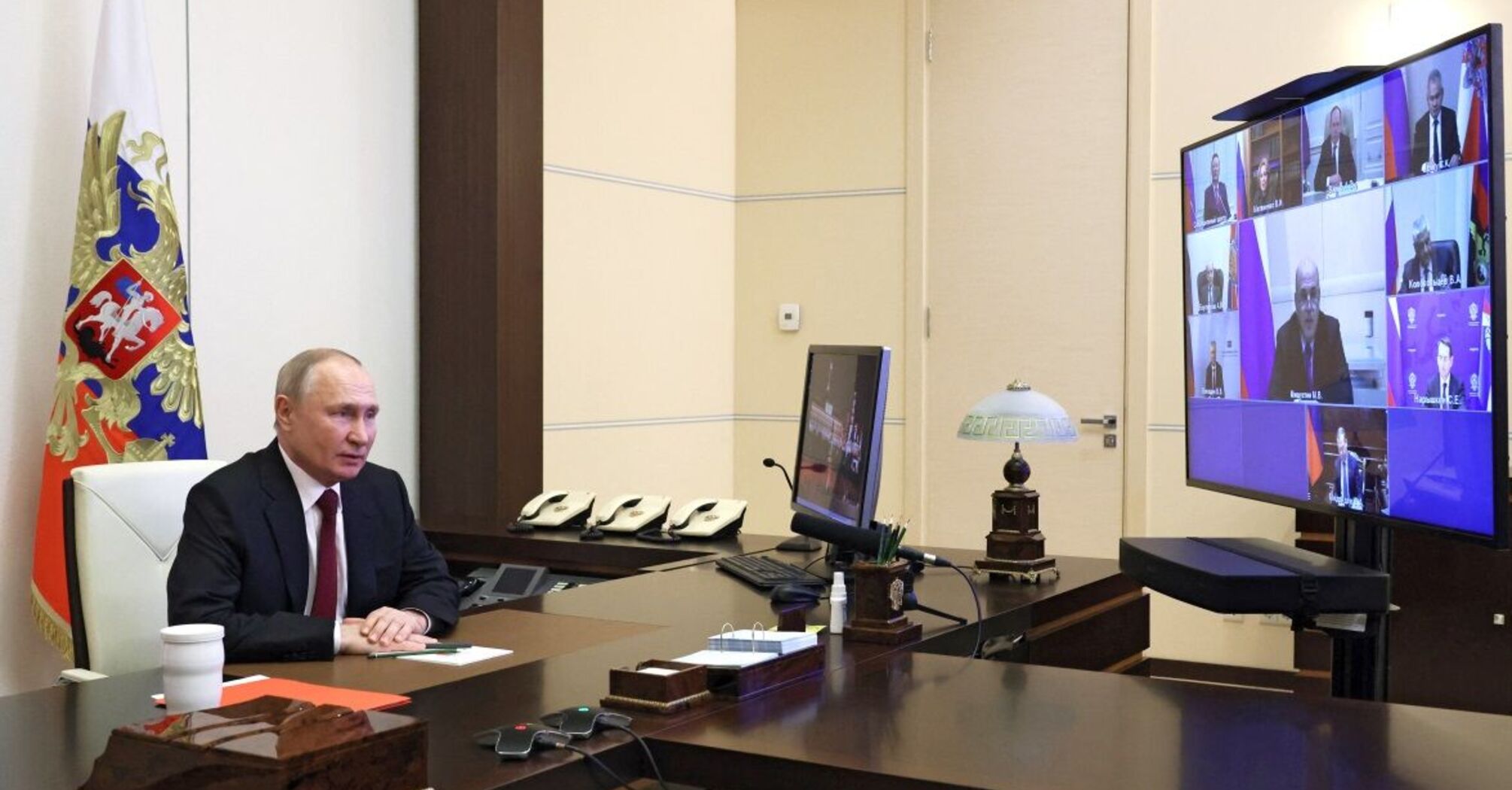
Three windowless offices: how the Kremlin hides the president and shapes decisions
Vladimir Putin has virtually isolated himself from the outside world and exercises control over Russia from three uniform, windowless offices located in different regions of the country.
According to information provided by The Times, each of these offices has identical equipment and furniture, including details such as original pencil holders with a double-headed eagle. This allows not only to hide his location, but also to keep even his closest entourage, who often do not know what time he is, in uncertainty.
This type of environment, described by journalists as “Zoom bunkers”, allows Putin to avoid mobile communications and access to the Internet. All meetings take place exclusively via secure video link, and his staff often only guesses about his real location. The use of several “empty” motorcades and fake movements helps the Kremlin conceal its true intentions.
The Bunker as an Information System
Specialists from the Presidential Communications Directorate have developed a sophisticated system called Special Comms that provides secure video communications. The computers in these offices remain disconnected from the general network, forming a kind of “information cocoon.” This isolation not only affects decision-making processes but also distorts the perception of reality: Putin observes the world through screens, which creates a sense of distance and control over the perception of events.
This style of management is also manifested in foreign policy. Thanks to “Zoom bunkers”, Putin gives orders to the military on the front in Ukraine and coordinates activities within the country. One example is the arrest and subsequent exchange of American basketball player Brittney Griner for Russian arms dealer Viktor Bout, which demonstrates the Kremlin’s willingness to use political prisoners for diplomatic purposes.
The Psychology of Working in a Bunker
Prolonged exposure to a closed, monotonous environment devoid of natural light or external stimuli can exacerbate feelings of control and isolation. For Putin, this allows him to make decisions in solitude, but at the same time distances him from the social and economic realities faced by his citizens. This is evident in the planning of arrests and prisoner exchanges, which are based on specific goals without involving other resources or consultation.
The Times journalists note that such bunkers turn Putin into a “screen man”, whose reality is limited to video conferences and reports. Even close advisers, security forces, and intelligence officers communicate with him only through secure communication channels, rarely having the opportunity to see him in person. This not only improves control but also creates a kind of “surface reality” where decision-making takes place in an artificial space.
Additionally, a meeting between Putin and North Korean leader Kim Jong-un recently took place in Beijing, lasting an hour and a half and demonstrating the closeness between the two regimes.