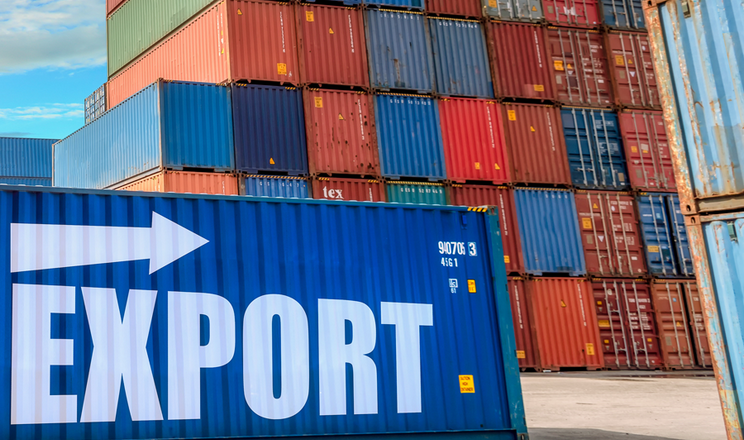
Pseudo-export under the protection of law enforcement agencies: how currency was regularly taken out of Ukraine
The agricultural sector remains one of the few sources of foreign exchange earnings that actually support the country’s budget. However, a mechanism has been operating within the state for many years that has worked exactly the opposite.
In fact, the currency was not generated; it was deliberately drained. This was not the result of management errors or incompetence, but a manifestation of a well-organized system. This meant creating a mechanism for pseudo-export, manipulating tax credits, and transferring assets outside the country, in which those who were supposed to liquidate it actively participated.
At the heart of this scheme is an informal alliance of high-ranking officials, including the former prosecutor general, the leadership of the financial monitoring agency, managers of the Bureau of Economic Security, and officials from the tax and customs services. It was this group that provided the scheme with protection – political, law enforcement, and administrative. Under their cover, dozens of fictitious agricultural companies have been carrying out activities that did not correspond to reality for years. They allegedly traded and exported, but in fact remained without goods.
The heart of this case is a complex network of fictitious farmers and traders, registered under nominal names, but managed through conscientious employees of tax and customs services. The companies’ names were supposed to create the appearance of competition, but in reality, they served only as decoration. In 2023-2024, billion-dollar transactions were carried out through these structures without any goods, warehouses, or confirmed deliveries.
One of the most striking examples is the company “Agrotrade Ukraine”, which announced the purchase of agricultural products worth over a billion hryvnias, with payments mainly in cash and without the delivery of goods. As a result, a tax credit appeared, which was used in subsequent financial transactions.
Export operations were carried out through foreign shell companies, such as HARVESTREAM AG and Cosmopolitan Trade. These structures did not conduct any real activities and served only as counterparties for the withdrawal of funds and for the failure to submit foreign currency receipts. According to official data, more than 290 million hryvnias were never sent to the country.
Then the banking level came into play, with money circulating through numerous accounts across various banks. One group accumulated VAT, another formally exported, and still others were engaged in legalizing the balances. Companies split payments, which complicates financial monitoring.
The law enforcement agencies’ reaction was indicative. Although they filed an appeal confirming the facts, the courts obliged them to initiate criminal investigations, but nothing further happened. The problem is not the investigators’ workload, but the deliberate blocking of investigations.
As a result, we are not dealing with an isolated corruption episode, but with a stable model in which the tax, customs, BEB, prosecutor’s office, and financial monitoring do not control but serve financial fraud. The economic losses exceed 530 million hryvnias, and this is only a preliminary assessment of the real losses.