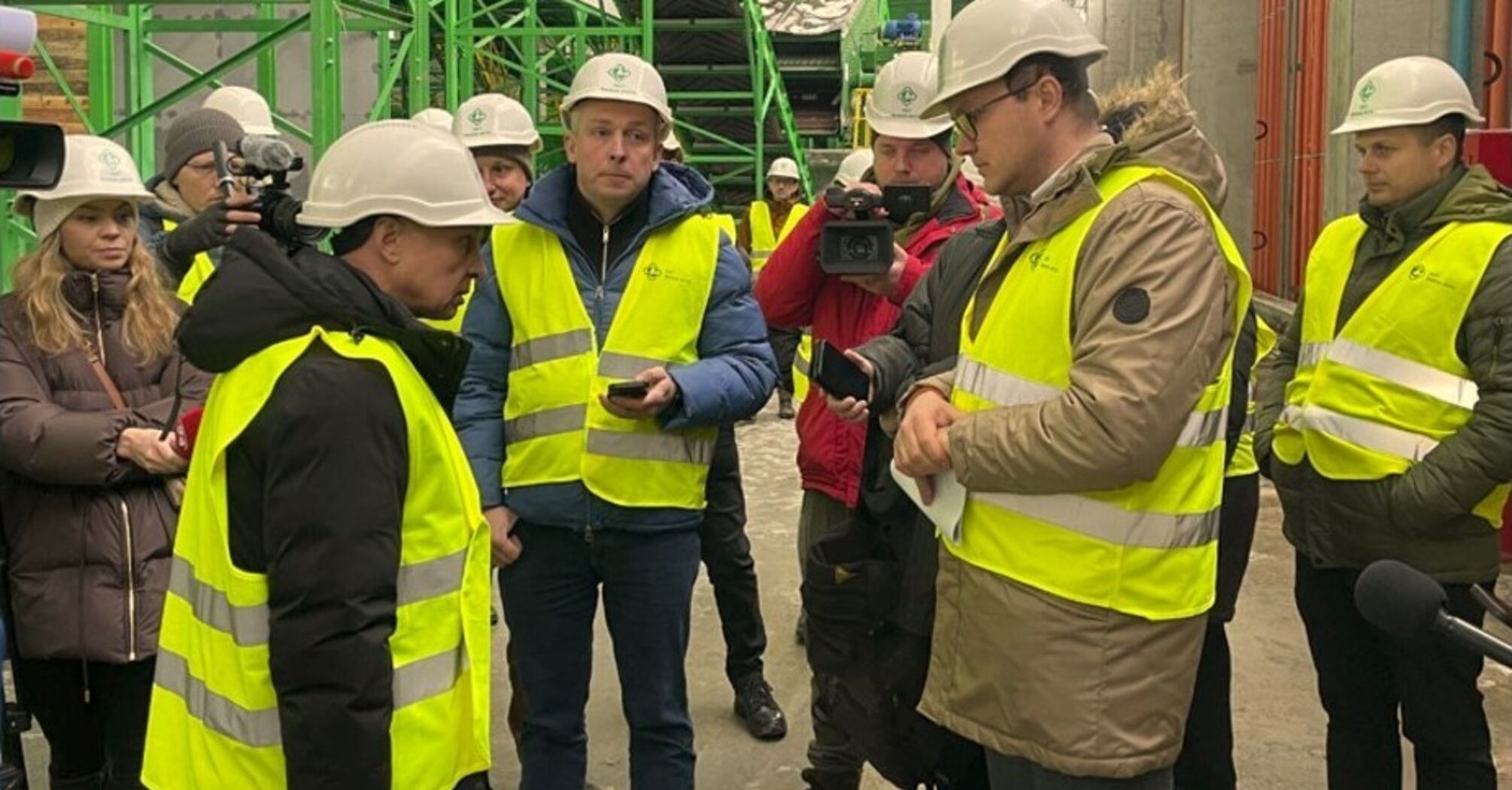
The waste processing plant in Lviv is ready to launch, but the conflict with the Sadovy team led to a major scandal
On January 28, 2026, an incident occurred at the Lviv waste processing plant, casting doubt on the city authorities’ efforts to complete one of the city’s most important infrastructure projects.
The initial working meeting with the architects unexpectedly turned into a conflict, as reported by “Zahedny Front”.
At the invitation of the Polish company Control Process S.A., a delegation from the National Union of Architects of Ukraine visited the Lviv waste processing plant on January 28, 2026. The purpose of the visit was to discuss recommendations for completing the construction and putting the facility into operation.
Krzysztof Haber, the EBRD project coordinator, met with the architects, familiarized them with safety measures and the current construction stages, and provided them with personal protective equipment.
The information received was to serve as the basis for further proposals to both the Polish contractor and the mayor of Lviv, Andriy Sadovy, regarding the completion of the work and the commissioning of the plant.
In the presence of architects, the waste sorting line and aspiration system were launched. The equipment functioned successfully, although the plant had not yet been connected to the required power grid capacity, nor had water supply and sewage been established.
According to the inspection results, the experts determined that the facility was 95% ready for operation. Krzysztof Haber reported that correcting residual deficiencies would take approximately 2 months.
The main problem remains financing: Control Process S.A. has not yet received any funds for the ready-to-operate sorting line, which the contractor considers to be a form of actual sabotage and plans to appeal to the European courts on this issue.
The conflict escalated when a group, including representatives of the Green City Paint and Coatings Cooperative and deputies of the Lviv City Council, burst onto the factory premises without an invitation. Among them was Andriy Moskalenko, close to the mayor of Sadovoye, who tried to question the meeting’s legitimacy but was confronted with the architect Igor Gets’s decisive position.
Moskalenko did not respond to the explanations and continued to ask the same questions, refusing to listen to Gets’s speech with a professional commentary.
Unexpectedly, attention was drawn to the statement of the director of the Green City Paint and Coatings Cooperative, who accused Gets of stealing project documentation. In response, the architect noted that the National Anti-Corruption Bureau of Ukraine, together with European investigators, is already handling this case, and important news is expected in the near future.
At the end of the meeting, Gets called on the media to refrain from concluding and wait for new information for two weeks, believing that important changes may occur in the conflict between Sadov and Haber in mid-February.
At the same time, the city administration’s announcement of the Lviv District Administrative Court’s decision, which found no violations in the actions of the LMR Executive Committee, seems premature. Other legal instances may reach a different conclusion.
Lawyers note that Judge Roman Brylovskyi rejected all of the plaintiff’s motions, including the request to conduct a construction and technical examination, which may serve as a basis for appealing the decision to the High Council of Justice.
It is worth noting that the SAPO has already received the results of examinations casting doubt on the legality of the Lviv City Council’s decisions regarding the plant on Plastova Street.