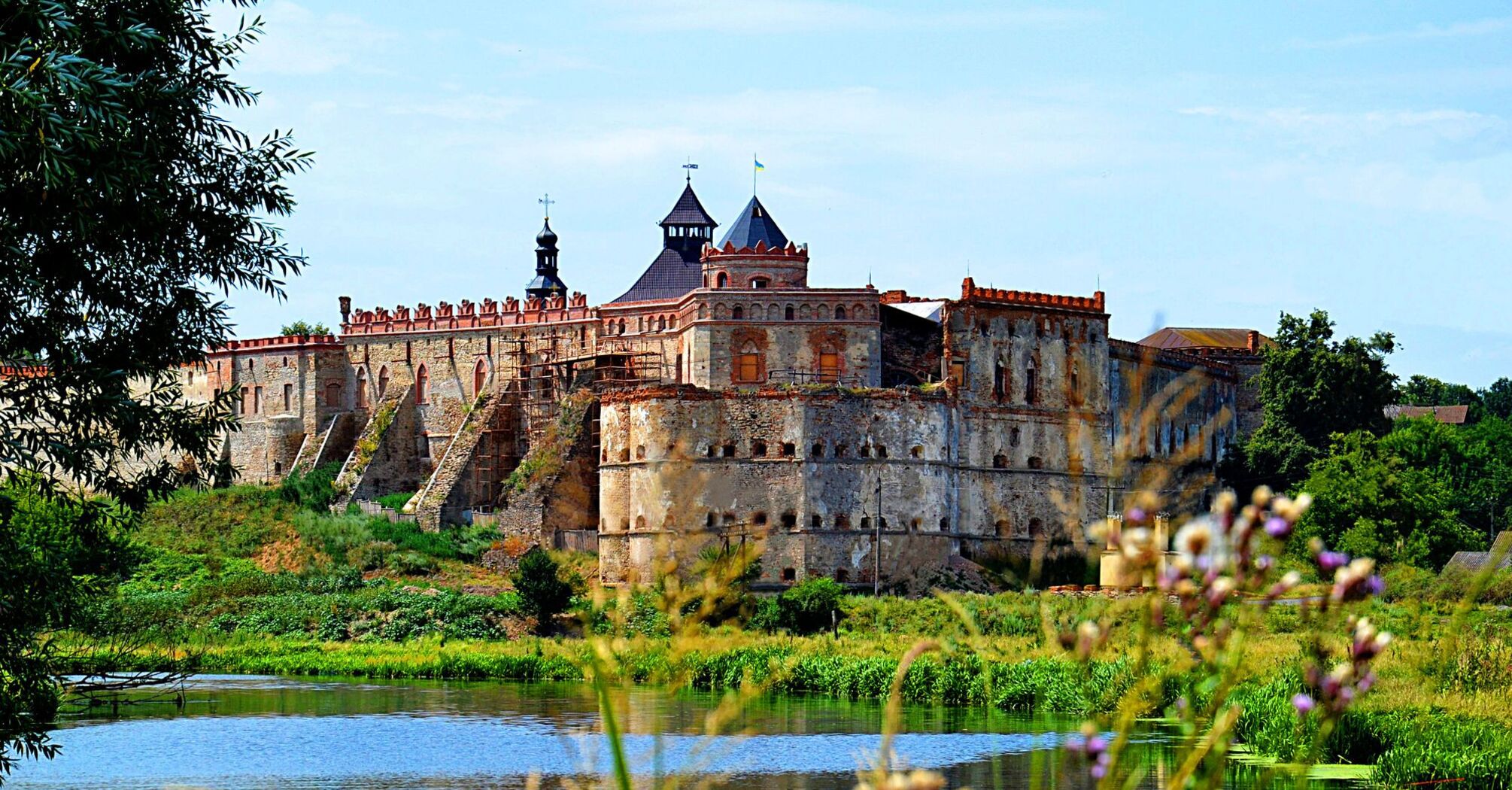
Medzhybizh Castle: a fortress that has preserved history and eternity
One of the most famous castles in Ukraine is Medzhybizh. It is located in the picturesque Podillia, where the Southern Bug and Buzhok rivers merge. Its name is associated with its location “between the Bugs”—this is the name given to this area in ancient times. The brick walls of the castle, built of limestone, have preserved many events, political intrigues, cultural phenomena, and amazing stories.
Historical heritage from Kievan Rus to the present day
The first written mention of Medzhybizh dates back to 1146. At that time, a wooden castle stood here, surrounded by earthen ramparts and towers and protected by moats. During the Kyivan Rus period, the fortress belonged to the princes of the Bolokhiv land and later to the Galicia-Volyn principality.
In the 13th century, the castle suffered significant damage from the Mongol-Tatar attack, and Danylo Halytsky was forced to partially destroy the fortifications on the orders of the Tatars.
Later, Medzhybizh came under the control of Lithuanian princes, particularly Olgerd and Koriatovych, who built a Romanesque church here.
In 1432, the castle became part of the Polish Commonwealth. Famous fortifications and new buildings, such as the Knight’s and Officer’s Towers, bastions, and churches, were actively built. In the 16th century, the castle fell into the hands of the Polish magnate Sinyavsky, who turned Medzhybizh into an important cultural and administrative center.
The Medzhybizh fortress was distinguished by its ability to withstand sieges. Thanks to its strong walls and powerful weapons, it successfully resisted Tatar attacks twice in 1566 and 1616.
Architectural features and fortifications
The castle walls reach 4 meters thick, and some towers are 20 meters high. Medzhybizh fortress is famous for its bastions of the Renaissance period, which adapted the castle to modern artillery, making it one of the first such examples in Ukraine.
The towers, particularly the Northern, Knight’s, and Officer’s, performed an essential defensive function and had windows for firing cannons. In 1564, the Holy Trinity Church was built here in the Baroque style, and a church existed on this territory from the time of Kyivan Rus.
The castle’s dungeons preserve ancient passages and galleries, which, according to legends, extended to neighboring cities. Archaeologists have not yet confirmed these claims.
Cultural and religious significance
In the 16th and 17th centuries, Medzhibizh was a military, administrative, and cultural capital. Alliances were concluded, and services were held in the chapels.
The 18th century was significant when Medzhibizh became the center of Hasidism. Baal Shem Tov (Israel Ben Eliezer), founder, lived and preached here. His grave in the castle is still a place of pilgrimage for Jews from all over the world.
Stages of decline and revival
After Poland’s partitions, the castle became part of the Russian Empire. In the 19th century, it served as a royal residence, and the walls were faced with white stone, which is why it was called the “White Swan.”
During Soviet times, the fortress fell into disrepair. It had barracks, a prison, a fire station, warehouses, and even a creamery. Part of the walls were demolished to build a village council.
Today, Medzhibizh functions as a museum and cultural center. There is a local history museum and an exhibition of traditional Ukrainian clothing. Since 2004, the medieval culture festival “Ancient Medzhibizh” has been held annually. The castle is in the process of restoration but already attracts tourists and pilgrims.
Legends of Medzhibizh Castle
Many myths surround the fortress. One of the most famous stories is about the wandering white ghost of a girl who was brutally killed before her wedding and is now looking for her fiancé in a wedding dress.
Another legend tells of the spirit of a monk who wanders the castle’s corridors.
There are also rumors about treasures hidden in the castle.
Interesting facts
The castle’s walls are up to 4 meters thick, a rare feature among medieval fortresses.
The 16th-century portal with stone carvings is a vivid example of Renaissance architecture in the country.
The castle was seriously damaged twice – in 1672 during the siege by the Turks and in 1944 as a result of bombing by German troops.
In 1846, Taras Shevchenko visited the castle and praised its impregnability and beauty in his works.
Medzhybizh Castle is a historical monument where the past and legends are intertwined. Visiting it early in the morning, when the dew is still on the grass and the fog spreads between the towers, you can feel that time has slowed down, allowing you to delve into history.